
Fight at the Museum
America Worst vs America First

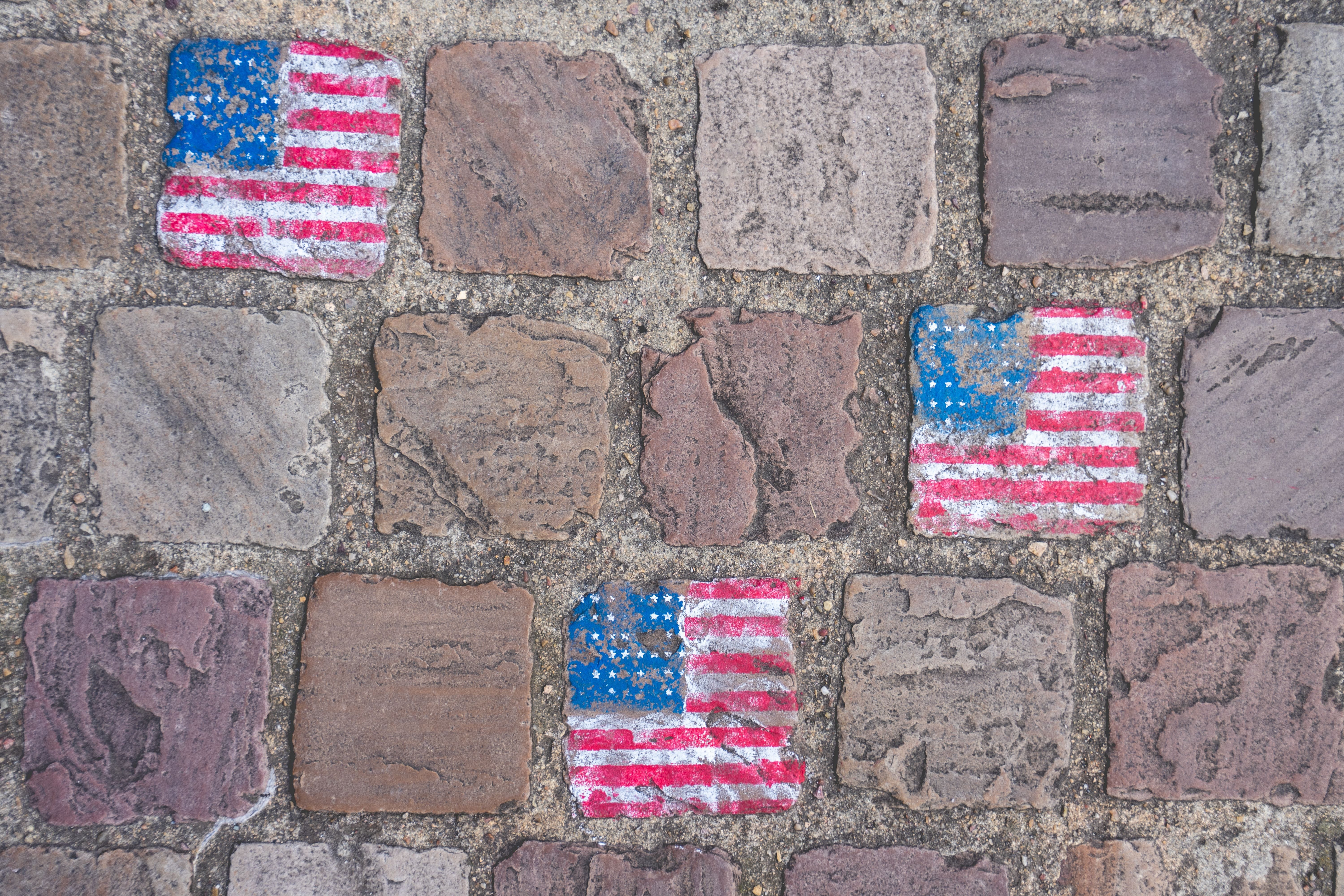
In July, President Trump signed an executive order directing the National Park Service to put up signs on the federal sidewalks outside the Smithsonian’s National Museum of American History. The signs are meant to challenge what the White House calls a distorted, ideological view of U.S. history, and to direct visitors to a report, Saving America’s Story, released on July 4.
The controversy brought me back to my first book, Sorry States. Focused on how national memory affects reconciliation between countries, it also explores the domestic politics of remembrance – which are very much in evidence in the current dispute.
Many readers likely view the controversy as caused by the Trump administration’s inappropriate interference, in which ideological non-experts are trying to impose a triumphalist, America-first historical narrative on the venerable Smithsonian. Indeed, the administration has previously waded into historical debates, with its 1776 Commission and, during this 250th anniversary year, “freedom trucks” touring the country with a mobile exhibition about America’s founding. More disturbingly, the administration has threatened Smithsonian funding and pushed for a museum director’s firing (leading to her eventual resignation).
While this indeed sounds disturbing, there’s another side of the story. What many Americans will see as a crisis is something else: people arguing, out loud, about their country’s story. This suggests not democratic decay, but strength.
The danger of the single story
In 2009, the Nigerian novelist Chimamanda Ngozi Adichie gave a TED talk called “The Danger of a Single Story.” She describes how her family spoke about one of their servants, Fide, entirely in terms of his family’s poverty. When she saw a beautifully crafted basket made by Fide’s brother, Adichie was surprised by his talent and creativity, which had not been part of her family’s single story of that family’s poverty.
After moving to the United States, Adichie herself later encountered a single story of Africa, when her college roommate assumed that she was poor and ignorant about technology. The roommate’s story about Africa wasn’t invented; it was simply the only one she had, making her unaware of the diversity of the African experience.
Indeed, Adichie argues that danger of a single story isn’t that it’s a lie, but that it is incomplete. She notes that single stories are a function of power – that as people compete to tell the story, they often silence competing interpretations.
Stories at the Smithsonian
The controversy at the National Museum of American History (NMAH) is about the struggle to tell America’s story. The story it tells matters; the museum attracts approximately 17 million visitors per year.
Despite widespread political polarization these days, museums remain a highly trusted institution in American life. Poll data show that not only do Americans value museums tremendously, 92 percent of them say they view museums as nonpartisan sources of information.
The Trump administration begs to differ—at least about the NMAH. “Museum leadership,” argues the White House report, “has explicitly adopted an ideological framework that no longer treats the American story as a shared national inheritance to be taught or celebrated, but as a political instrument to divide, dispirit, and discourage our citizens.”
The report lists several problems. It argues that in this 250th-anniversary year, the NMAH offers no major exhibit on the founding era, on Washington or Jefferson, on the Continental Congress or the Revolution. Benjamin Franklin makes an appearance because of his antislavery work. The report quotes NMAH director Anthea Hartig saying she views history as “a prime tool of social justice” and celebrating the museum’s “Decolonization Plan”; it indicts the museum’s exhibits and educational curricula for far-left politicization.
The report would go even further than Trump’s executive order, recommending “it would benefit most Americans, especially parents bringing their children for a tour, if the Smithsonian’s flagship history museum had a label at every entrance that reads: ‘Warning: the exhibits in this museum were prepared by people who don’t want you to love your country.’”
This swipe at what the report calls unpatriotic curators lays bare its assumption that museums are places to emphasize national achievements and instill national pride. Although this is a defensible viewpoint (and a fundamental conservative value), it risks leaning into a single celebratory story.
Liberals, by contrast, value self-critical history as strengthening the country and celebrating its freedoms. As author James Baldwin wrote, “I love America more than any other country in the world, and, exactly for this reason, I insist on the right to criticize her perpetually.” Thus when the historians at the NMAH downplay stories about the nation’s founding and interpret American history through race, migration, gender, sexuality, hierarchy, and power, they believe they are engaged in a constructive, not destructive enterprise – indeed, an act of patriotism.
The dangers of a single history
Those choices may produce illuminating stories about the American past. But a virtue of the current controversy is that it remind us that they are not handed down from the heavens on stone tablets, but choices by museum curators and administrators. And importantly, this group has its own proclivity to tilt toward a single story.
We don’t have a party breakdown of NMAH curators, but we do have data on the pipeline from which they emerge. In a study of faculty at 40 leading universities, Mitchell Langbert, Anthony Quain, and Daniel Klein found that registered Democrats outnumbered Republicans in history departments by 33.5 to 1 — the most skewed of any of the fields they examined.
Thirty-three to one is a problem. Scholarly norms and priorities converge, and are transmitted to younger scholars, about what questions are appropriate and important, language one can and cannot use, and what counts as high-quality and “interesting” work. Young people who “get it right” are elevated, while others who challenge orthodoxy are excluded. Nobody at the NMAH experiences their work as ideology. It’s what a single story feels like from the inside.
We’ve done this before
The approach of August 6 – the anniversary of the U.S. nuclear bombardment of Hiroshima – brings to mind another tussle at the Smithsonian.
In 1994, the National Air and Space Museum (NASM) was planning a fiftieth-anniversary exhibit around the aircraft that dropped the atomic bomb on Hiroshima, the Enola Gay. The exhibit emphasized Japanese suffering on the ground and encouraged visitors to ponder whether the atomic bombings were necessary.
Veterans’ organizations revolted. The Air Force Association and the American Legion demanded that the exhibit be canceled. The Senate passed a resolution calling the script “revisionist and offensive” – a resolution that passed unanimously (can you imagine?). 81 members of Congress called for the NASM director’s resignation, and Rep. Newt Gingrich threatened Smithsonian’s funding.
In January 1995 the Smithsonian cancelled its planned exhibition, and that May, NASM Director Martin Harwit resigned. What finally opened the next month was a fuselage and a modest label. (Today the Enola Gay is exhibited at a Smithsonian annex near Dulles airport.)
Scholars usually lament this episode as politics interfering with scholarship. But this framing neglects the virtue of the debate itself. Smithsonian curators enriched the story of World War II’s end and the dawn of the nuclear age: pushing for inclusion of the effects of nuclear bombardment, and expanding the narrative to include the perspective of the victim. Others argued in newspapers, hearings, and kitchen tables. Historians published. Veterans testified. The Japanese weighed in too, with the prime minister and atomic bomb survivors (hibakusha) urging the museum to include victim artifacts, such as charred clothing, that showed the horror on the ground. Competing memories were forced into the same room. Nobody got the single story they wanted, which is exactly the point.
Today, if one visits the Smithsonian’s National Museum of Nuclear Science and History in Albuquerque, NM (as I did recently—highly recommended), their story of the Manhattan Project is enriched by a section that discusses the effects on Japan. The exhibit also describes the science in transnational rather than American-centric terms: explaining the contributions of many scientists across time and space (and describing the nuclear programs pursued in Germany, Japan, and Russia). At this Smithsonian museum, then, many stories are on display.
The alternative
Contested history is sign of neither weakness nor authoritarianism. Authoritarian governments use censorship, coercion, and information control to craft a national story that serves the regime’s goals while suppressing other stories. In China, for example, a law prohibits “the distortion, defamation, desecration, or denial” of the deeds and spirit of ‘heroes and martyrs,” and such actions are punishable by up to three years in prison.
Democracies are messier. We have the freedom to access, share, and discuss information. We fight about the past in public, often noisily, sometimes unfairly. The point is that no curator, president, party, or professor gets the final word.
When democracies criminalize historical claims (Germany is the best-known case for its Holocaust-denial statute), people should debate the effects on scholarship and politics. Indeed, European historians have done so: in what was called the 2008 Appeal of Blois, signatories argued “it is not the business of any political authority to define historical truth and to restrict the liberty of the historian by penal sanctions.” Although Holocaust denial laws might seem straightforward and important, the danger is in the gatekeeping. Ultimately some person or party will have the power to decide what historical claims fall within the ban – a policy of exclusion that tilts a country closer to a single story.
So, when it comes to the controversy over the National Museum of American History, hold the hearings. Publish the rebuttals — the House Democrats already have. Hear from the professors and the Organization of American Historians. Summon the directors to hear why they think a national museum should “problematize” U.S. history, and decide if you agree with them. Step inside that “freedom truck,” take a look, and debate what you see. And refuse to be content with the single story.
It's not clear in what world Japan and the Japanese should rightfully be considered the victim in WWII. It's true that in the end it all turned out poorly for the Japanese government, military and Japanese citizens alike. But starting in Manchuria, then the asian co-prosperity sphere, Pearl Harbor, widespread atrocities, and gruesome treatment of EPWs are among the many ways that Japan, its military, and its society were the aggressors and brutal ones at that. Framing the Japanese as victims is exactly what many veterans and conservatives find deeply offensive. In the 1994 example about the Enola Gay, had the Smithsonian framed the question as "were the atomic bombs necessary to end the war with Japan?" while controversial, this would have been well within the wheelhouse of unbiased and apolitical academic debates. Instead, by framing the Japanese as the victims, this essay brings to mind questions about whether males (men?) should be allowed to play in females' (women's?) leagues and sports. It's true that there are sincere people who cannot bring themselves to answer questions like that, or who find solace in counting the number of angels on the head of a pin, but for the vast majority, framing questions along these lines is probably not helpful, though it is provocative (as you can see, I rose to the bait). There are numerous examples of the Smithsonian's recent and current leadership framing issues of American identity in this sort of way.