

Many observers praise the liberal international order as a remarkable evolution in world politics that restrained the U.S. superpower and built support among other countries. Critics see it a mere patina for hardball international politics. Professor Michael Poznansky moves past this “either-or” with a new book that examines when the United States complied with, versus violated, the rules of the order.
We at Dartmouth got to know Mike as a Rosenwald postdoctoral fellow; since then he’s gone on to do great things. An associate professor in the Strategic and Operational Research Department at the U.S. Naval War College, Poznansky1 is also affiliated with the Cyber & Innovation Policy Institute. His research sits at the intersection of security and intelligence studies. –J. Lind
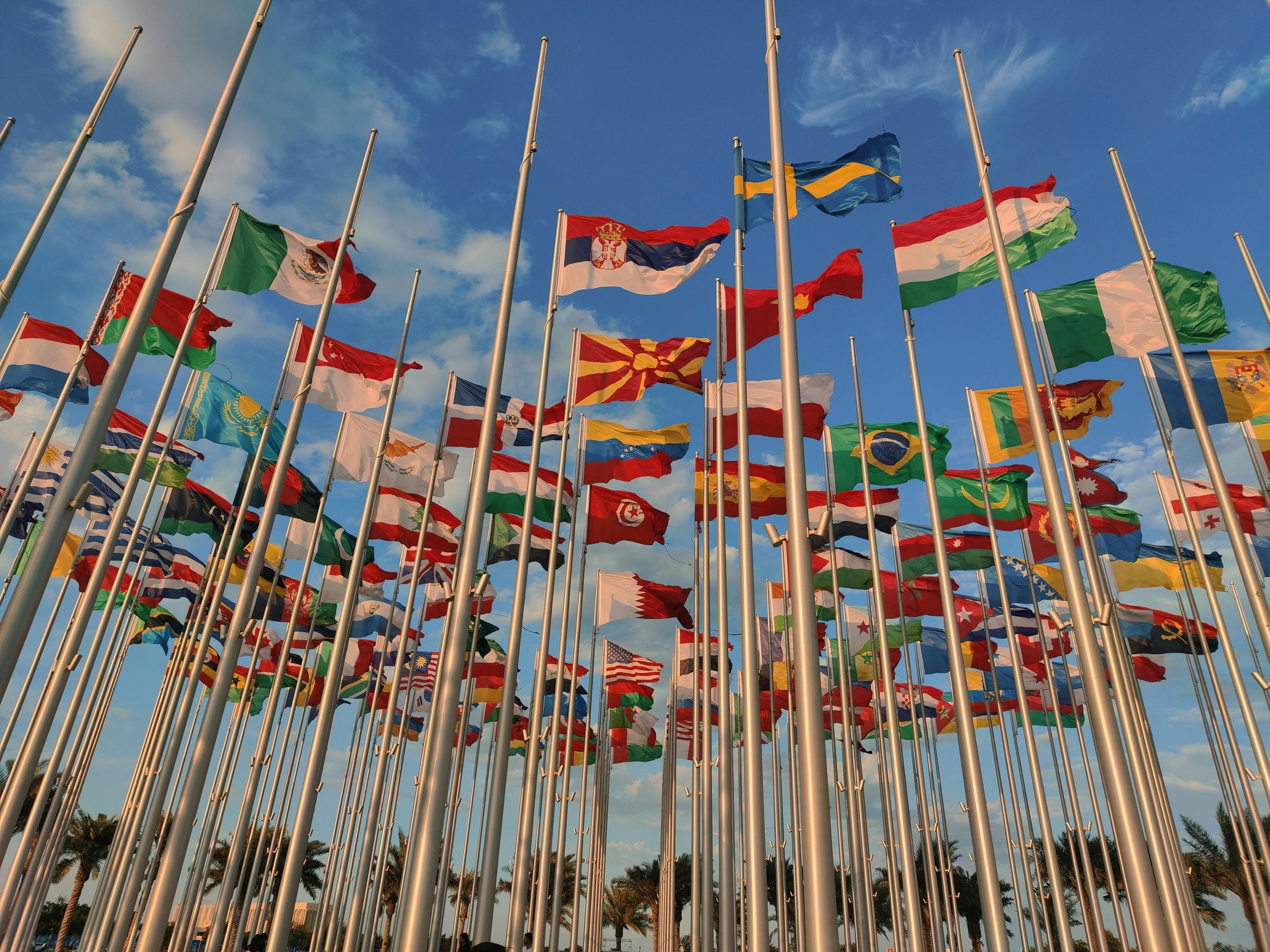
Much like Donald Trump’s ascent to the presidency the first time, his return to the White House has led to renewed debates about the future of the liberal, or rules-based, international order (LIO). The four most recent issues of Foreign Affairs, for example, are jam-packed with articles debating different aspects of this topic. But like the nature of these debates after 2016, both proponents and critics of the liberal international order are often talking past one another.
In my new book, Great Power, Great Responsibility: How the Liberal International Order Shapes US Foreign Policy (Oxford University Press, 2025), I peel back the curtain on how the LIO actually influenced major national security decisions with a special focus on the use of force. Contrary to the expectations of the LIO’s most ardent defenders and critics alike, I argue that the nature of U.S. compliance is contingent. Policymakers largely base decisions about whether and how to comply on two factors: the presence or absence of a peer competitor promoting an alternative order, and the ease of following the LIO’s rules and norms. I evaluate the argument in nine cases involving the use of force from the Korean War to the Iraq War.
DEBATING THE LIBERAL INTERNATIONAL ORDER
In its most basic form, the liberal international order refers to the rules, norms, and institutions the United States created in the wreckage of World War II (think NATO, the United Nations, the World Bank, and so on). Proponents argue that policymakers generally abide by the LIO because it is in their interest to do so. Adhering to the core principles and rules the United States helped establish legitimized the postwar order and ensured that other states continued to buy into it.
Critics take a radically different view. The strongest version is that the LIO was essentially a myth from the very beginning. The basic idea is that great powers do what they want, whenever they want, unconstrained from the niceties implied by a rules-based system. Some critics contend that the United States did advance a liberal order during the unipolar period after roughly 45 years of realist competition with the Soviet Union but that it began to fray by the mid-2000s.
Proponents have not truly wrestled with the fact that the United States has often acted at odds with the LIO.
Both camps are onto something—and both face limitations. Proponents have not truly wrestled with the fact that the United States has often acted at odds with the LIO. During the Cold War alone, the U.S. pursued regime change roughly 70 times according to one study. Critics readily acknowledge these departures. But they have yet to explain why policymakers went out of their way to hide LIO violations in some cases but not others. This distinction matters. Secrecy doesn’t simply impose limits on what interveners can do. It also serves as tacit acknowledgment that leaders care about how others perceive their actions and take pains to hide rule-breaking as a result.
THE CONTINGENT COMPLIER
Great Power, Great Responsibility reconciles these competing views. The central argument is that America’s approach to the liberal international order is contingent on two factors. The first is the burden of compliance. This captures whether it is easy or difficult for U.S. policymakers to pursue a given objective in accordance with the LIO. Self-defense is straightforward. The UN Charter, a core pillar of the LIO, clearly permits the use of force for this purpose.
The rules are more stringent for broader objectives like upholding international peace and stability. The Security Council’s stamp of approval is the gold standard. Regional backing is a close second. When U.S. policymakers lack such support, we can say that the burden of compliance is high since they cannot pursue desired objectives without running afoul of agreed-upon rules and norms governing the use of use force. And as I explain in the book, it is harder than it seems for leaders to engage in forum shopping simply to find a compliant body to green-light intervention.
The second factor affecting US compliance is the intensity of order competition. This captures whether the U.S. faces a great power competitor vying for control over international order. During the Cold War, of course, the United States faced a great-power rival. The collapse of the Soviet Union gave way to an era in which the United States was the lone superpower. The presence of a rival, I argue, exerts a restraining effect on the United States by forcing U.S. policymakers to jockey for influence over other states. One of the most powerful tools for doing this is following, or appearing to follow, the LIO’s core tenets. Without a peer competitor offering its own vision for international order, policymakers are far less concerned about the ramifications of overt LIO violations, particularly when it conflicts with other goals.
The burden of compliance mainly affects whether leaders want to violate the LIO while the intensity of order competition affects how risky leaders think violations would be. Together, this framework yields distinct strategies of (non)compliance that help explain decades of U.S. foreign policy.
THE EVIDENCE
During the Cold War, America’s rivalry with the Soviet Union rendered the intensity of order competition high. Leaders worried a great deal about the risks of brazenly violating the LIO as a result. The burden of compliance varied across cases; when the burden of compliance was low, U.S. leaders openly followed the LIO’s rules and norms. For example, in the first months of the Korean war, the Truman administration consciously sought, and received, UN backing at crucial stages including the decision to deploy coalition forces north of the 38th parallel in a bid to reunify the country.
In cases where the burden of compliance was high, leaders turned to secrecy to essentially feign compliance and try to safeguard America’s reputation. Covert regime change in Guatemala is a paradigmatic example. Leaders also tried covert action against North Vietnam in the early stages of what would become the Vietnam War before eventually escalating despite the risk of alienating allies and non-aligned powers and giving the Soviets an opportunity to chastise the U.S. on the world stage. This case therefore offers mixed support for my argument.
I also explore the transition to the unipolar era. In this period the predictions are among the most complicated—and interesting. During the invasion of Panama in 1989, we see policymakers testing boundaries; they justified forcible intervention in ways that were contested but plausibly LIO-consistent. During the two years of the Gulf War, policymakers capitalized on UN Security Council approval to expel Iraq from Kuwait, but – failing to receive international support for ousting Saddam Hussein – sought to do this through covert activities rather than stretch their mandate for the Kuwait mission. The years leading up to intervention in Bosnia (1992-1995) reveal leaders tempted by open unilateralism, backing down, and finally making peace with the prospect of openly going-it-alone (before eventually getting the multilateral support they had been seeking from NATO and the UN).
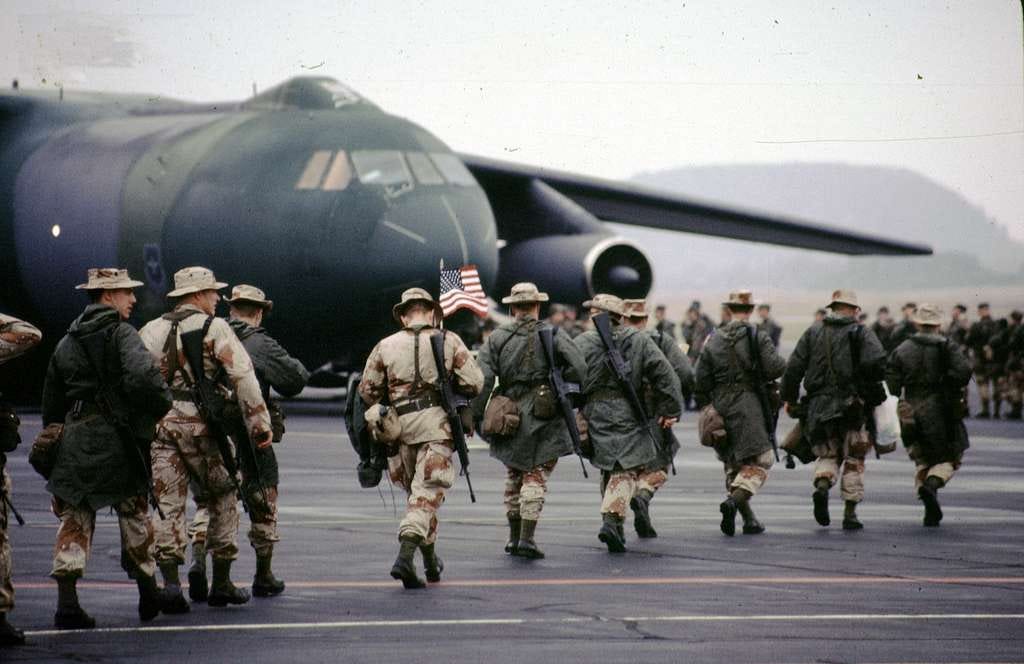
During the unipolar period, the absence of any great power rivals created a low level of order competition. This, in turn, reduced policymakers’ concerns about openly breaking with the LIO when faced with pressing national security challenges. In Iraq in 1998 and again in 2003, Clinton and Bush, respectively, pursued unilateral military action against Saddam over the strenuous objections of most allies and international bodies. In Kosovo, U.S. leaders intervened without UN backing. And while they eventually got NATO support rendering the operation more LIO-consistent, they were willing to go-it-alone if needed.
IMPLICATIONS
Understanding how the liberal international order has—and has not—influenced U.S. foreign policy from the founding to the present makes it easier to have a more informed conversation about U.S. policy toward the order going forward. Great Power, Great Responsibility is itself neither an endorsement nor an indictment of the LIO. But dispelling prominent misconceptions about the postwar order is a prerequisite for having honest conversations about what, if anything, requires reconsideration.
To take one example, my book shows that the common notion of the Clinton administration as deeply committed to the liberal order, and the Bush 43 administration as hostile to it, is too simplistic—at least regarding the use of force. Clinton, like Bush, was more than willing to openly act alone if necessary in pursuit of foreign policy objectives. This suggests that things like the preferences of individual leaders or their advisors and party affiliation are often less determinative of U.S. compliance with the LIO than structural factors.
the common notion of the Clinton administration as deeply committed to the liberal order, and the Bush 43 administration as hostile to it, is too simplistic
Great Power, Great Responsibility also has implications for the return of great power competition with the rise of China. Most importantly, policymakers will confront dilemmas that have largely laid dormant for the better part of thirty years during unipolarity. Regardless of whether the U.S. and China are in fact in a new Cold War, the presence of a great power rival vying for control over the future of the international order means that the costs of openly violating the LIO will be higher to the United States than they have been in decades. For U.S. leaders, this will necessitate careful consideration of how best to balance the pursuit of national interests when they clash with the postwar order’s rules and norms. In many cases, leaders may find that strategic restraint—or at least the appearance of it—is far more valuable than it than it has been for the preceding decades.
Like to hear more? Listen to this podcast in which Prof. Poznansky discusses his book with host Prof. Eleonora Mattiachi.
The views expressed here are the author’s own and do not represent those of the U.S. Naval War College, the Department of the Navy, or the Department of Defense.
